• Skip to primary navigation
  • Skip to main content
  • Skip to primary sidebar

Edie & Amy Co

Conception: Pregnancy: Child Birth & Upbringing

  • Home
  • Conception
  • Pregnancy
  • Child Birth
  • Child Development
  • Product Reviews
  • Our Store
  • Contact Us
You are here: Home / 2020 / Archives for April 2020

Archives for April 2020

7 Signs of Hunger in Newborn Babies

April 25, 2020 by Dr. Ijeoma Idaresit Founder - Edie & Amy Co Leave a Comment

Babies are usually good communicators. The trouble is we don’t often pay attention or know what to look out for. The following are common signs that your baby is hungry:


7 Signs of a Hungry Baby
  1. Baby keeps opening the mouth
  2. Sticking out the tongue
  3. Making sucking movements
  4. Baby is constantly bringing their hands up to their mouth
  5. Moving their limbs as though crawling or cycling in the air
  6. Turning their head towards the chest or breast of whoever is carrying them
  7. Crying and being irritable. Crying is a late sign of hunger and some babies may get so worked up that they won’t want to latch onto your breast or teat of the bottle or they could latch onto your nipple in their haste and annoyance. This, I assure you, will bring you exquisite pain.
7 Signs of Hunger in a baby

A satisfied baby is relaxed with inactive limbs, may turn away from your chest , let’s go from breast or bottle feeding and fall asleep.

Baby’s tend to cluster feed at times when they are experiencing rapid growth. Cluster feeding is characterised by showing signs of hunger more frequently than usual (frequently observed by mothers who schedule their baby feeding times at intervals as opposed to feeding baby on demand).

What is Cluster Feeding?

Cluster feeding is when the baby wants to feed frequently over a short period of time. It is very normal with new born babies.

A baby who usually feeds every 3 hours may demand for food every 2 hours for a span of 3 days. for breastfeeding mothers, it’s natures way of increasing your milk supply by demand more milk from you in response to your babies next stage of growth characterised by the need for larger quantities of milk. Growth spurts can be observed at 2 days old, 3 months old, and 6- 9 months old.

HOW CAN I TELL IF MY BABY IS GETTING ENOUGH ?

This a question asked by new mums all over the world. Newborn feeding constantly leads to friction between new mothers and their mother and mothers-in law in Nigeria. The anxiety this causes tempts us to introduce water or formula in the first few days of life when our actual goal was to breastfeed exclusively.

These conflicts stem from:

Lack of knowledge of individual and general signs of hunger and feeding patterns in newborn.

Lack of knowledge of the normal progression of weight gain/ fluctuations

Lack of knowledge of the signs that a baby is being adequately nourished.

Poor infant feeding practices or alternatives when challenges arise

Filed Under: Child Birth, Child Development Tagged With: baby, feeding a baby, hungry baby, Signs of hunger in a baby

Fluctuations in My Baby’s Weight: How do I tell what’s normal?

April 23, 2020 by Dr. Ijeoma Idaresit Founder - Edie & Amy Co Leave a Comment

Your baby’s stomach size is really small at first. At the first to third day of life, your baby’s tummy is the size of a cherry or 1 grape and can only hold a teaspoon of milk ie. 5-7 mls per meal.

By day three to five, it is the size of a table tennis ball or walnut. From six days old up to 3 weeks old baby’s stomach is the size of an egg and so on. Knowing this should restrain you from overfeeding your baby which could cause undue discomfort and distract you from the real cause of why our child may be fussy.

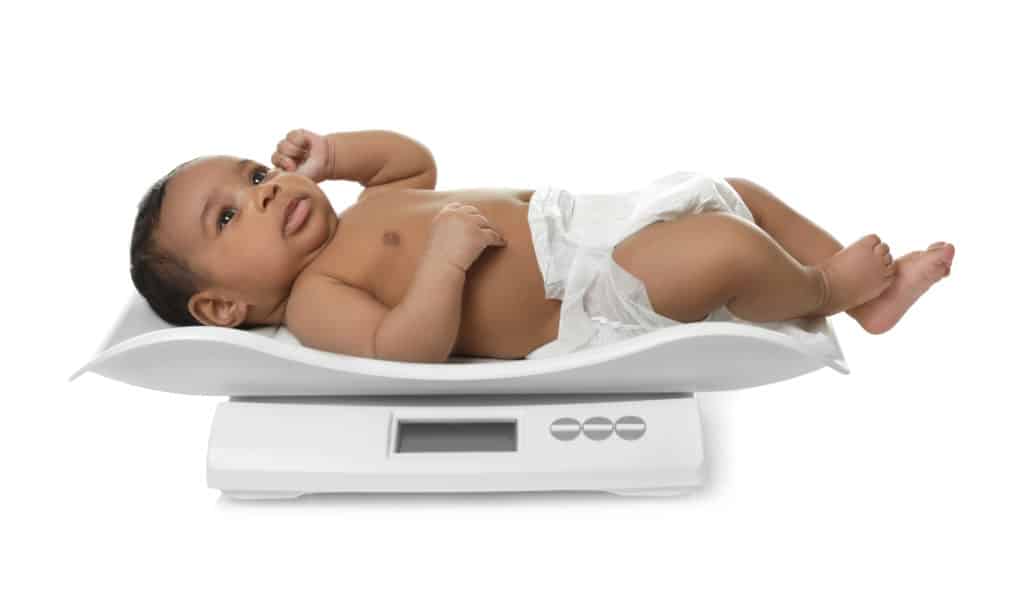
The only way of confirming changes in your baby’s weight is by weighing your baby.

All babies lose no more than 10% of their body weight within the first 5-7 days of life before returning to their birth weight by week 2. Baby’s weight should increase by 50% at 6-8 weeks old and double his/her birth weight at 4-5 months old.

Changes in your baby’s weight is another source of anxiety and potential conflict with loved ones as far as a first time mum is concerned. These fluctuations are expected and should be verified during your well baby visit after delivery using an appropriate infant weighing scale.

Any deviation from the trend described above may then prompt investigation of your baby’s nutrition or breastfeeding practices. The weight and length measurements for your baby should be entered in a chart which usually comes with your immunization card and each entry is benchmarked against the normal range for baby’s age within your society/race which is also usually shown on the chart. Looking at a chart showing baby’s weight over time gives a more objective view of if your baby is being adequately nourished.

Signs that your Baby is being Adequately Fed

A well fed baby will :

  1. Have 4 -6 wet diapers (urine) and 3-4 poopy diapers daily. Note that exclusively breast fed baby’s can go up to 3 days without passing stool at 3 months old. Formula fed babies can get easily constipated if you fail to follow the instructions for proportions of water to formula while preparing their meal.
  2. Gain weight in accordance to the normal range for his/her age and race as entered in the growth monitoring chart mentioned above

Is there a need for vitamin supplements in infants? Formula-fed babies do not need multivites, however, babies being exclusively breastfed are required to get vitamin D drops.

Filed Under: Child Birth, Child Development Tagged With: baby health, baby on scale, baby weight, giving birth, Weighing a baby

YOU ARE A NEW MUM, NOW WHAT ? Tips for surviving the first days after childbirth (Part 1)

April 22, 2020 by Dr. Ijeoma Idaresit Founder - Edie & Amy Co Leave a Comment

Surviving the first few days after childbirth

Having a baby is such a miracle. As mums, we often plan for our pregnancy and delivery but end up having relatively less information on what to expect and how to deal with the changes in our bodies after our babies are born. While every woman’s experience is unique, there are simple solutions that cut across as well as universal warning signs to pay attention to.

Lochia

Whether you had a vaginal birth or Caesarean section it is expected that you would have some discharge from your vagina for the first six weeks. This discharge called “lochia” is a mix of blood and tissue being shed from a new mother’s womb, cervix and vagina as her reproductive system returns to its pre-pregnancy state. It is at first bright red, then transitions from brown, to yellow before becoming clear.

It’s normal to notice small clumps of blood mixed with it (known as clots). There are, however, a few warning signs that if noticed, show that you need to get back to the hospital as soon as possible:

-Lochia with a foul odour (a sign of an infection)⠀⠀⠀⠀⠀⠀⠀⠀⠀

-Lochia soaking one or more sanitary pads in 1 hour or less ⠀⠀⠀⠀⠀⠀⠀⠀⠀

-Observing clots of blood larger than in size than a small egg⠀⠀⠀⠀⠀⠀⠀⠀⠀

-Experiencing sudden and continuous heavy bleeding ⠀⠀⠀⠀⠀⠀⠀⠀

-Feeling dizzy with increased bleeding ⠀⠀⠀⠀⠀⠀⠀⠀⠀

-Severe tummy pain or cramping ⠀⠀⠀⠀⠀⠀⠀⠀⠀

-Having a temperature above 38 degrees centigrade ( Please check with your baby’s thermometer to get a reading. Using your palm is not a reliable way to check for fever)⠀⠀⠀

Please take the issue of lochia seriously as excessive bleeding and infection after childbirth are one one of the leading causes of poor health outcomes and death for new mothers in Nigeria

Pain and Soreness

Your body has just been through a lot. If you had a vagina birth, the skin around that area has been stretched to the max and you may have sustained had a tear or had to have a small cut (episiotomy). With a Caesarean section you literally just went through major surgery. It’s therefore normal to feel soreness and pain after childbirth. Your health care provider should give you appropriate pain medication to keep you comfortable. On your own part, there are ways of facilitating this pain relief using water at different temperatures. To be continued…..

Filed Under: Child Birth, Pregnancy Tagged With: episiotomy, Lochia, post partum, Virginal Discharge

YOU ARE A NEW MUM, NOW WHAT ?Tips for surviving the first days after childbirth (Part 2)

April 17, 2020 by Dr. Ijeoma Idaresit Founder - Edie & Amy Co Leave a Comment

Newborns have the cutest feet!

Your body has just been through a lot. If you had a vaginal birth, the skin around that area has been stretched to the max and you may have sustained had a tear or had to have a small cut (episiotomy). With a Caesarean section you literally just went through major surgery. It’s therefore normal to feel soreness and pain after childbirth. Your health care provider should give you appropriate pain medication to keep you comfortable. On your own part, there are ways of facilitating this pain relief using water at different temperatures.

Ice : Consider stuffing the insides of your baby’s diapers with ice and applying it as a cold compress around your perineum ( the area around your vagina and anus) within the first 24-48 hours. This provides some relief and helps with the swelling.

· Apart from cases where you have had a caesarean section hot baths do provide a lot of relief .

· Mums who have had vaginal birth are advised to sit in a bowl of tepid water 2-3 times daily. This is particularly helpful if you developed haemorrhoids during or after delivery.

· Pillows – Sitting on a pillow is more comfortable than without one for mums who have had vaginal births. Pillows can also help to position your baby while breastfeeding in the cradle, rugby hold or side-lying position. This way, the weight of the baby doesn’t rest on your incision for mums who have had their babies via Caesarian section. Finally, where a cough can’t be suppressed, hugging a pillow to your tummy while coughing can reduce the impact of the cough on your incision.

Breastfeeding with a nursing pillow

While some discomfort is expected after childbirth please don’t ignore the following warning signs.

Go back to the hospital immediately if:

  1. You feel pain or burning when you pee and have developed a fever
  2. You feel severe pain while breastfeeding ( you may have developed a nipple infection or your baby may be attached to your breast (ie. latching) wrongly and you may end up with nipple cracks and later an abscess)
  3. You feel increasing pain around your vagina or anus
  4. You feel continuous, intense pain or cramps in your tummy this is not to be confused with after pains that arise as you womb shrinks back especially during breastfeeding)
  5. You feel a sudden or increasing pain around your incision if you had a C-Section
  6. You develop a severe headache and have spots of light in your vision
  7. You develop pain in your legs or arms ( a possible sign of deep vein thrombosis ie. DVT which is a clot in that limb)

Filed Under: Child Birth, Child Development Tagged With: Breastfeeding, Ceasarian, Child birth, Postpartum

YOU ARE A NEW MUM, NOW WHAT ? Tips for surviving the first days after childbirth (Part 3) – Your Mental Health

April 16, 2020 by Dr. Ijeoma Idaresit Founder - Edie & Amy Co Leave a Comment

You are not alone. Hormonal changes after childbirth can affect your mood.

Childbirth is followed by a rapid drop in pregnancy hormones. These changes have documented effects on the human brain. Add an extra layer of sleep deprivation which also has known effects on hormone levels and mood and an unexpected outcome such as an emergency Caesarian section or a traumatic birth experience and you have a recipe for a new mum’s emotions to take a hit. 80 % of Mothers often feel out of sorts emotionally within the first few weeks after they have had their babies this is called postpartum blues.

Another 10-15 percent with certain risk factors go on to develop postpartum depression or anxiety while a smaller population (5%) develop postpartum psychosis.

These mood disorders are real. There are women here in Nigeria suffering in silence because they are to scared to voice the dark thoughts of deep sadness, guilt, hopelessness and fear going through their minds at a time when they are expected by their families and society to be overjoyed and do not want to be associated with the stigma of having mental health challenges.

It is important that once recognized you share these feelings with someone you trust and seek help from a professional (clinical psychologist or a psychiatrist).

Accept support from friends and family with basic chores where available and do not compromise on your sleep.

Untreated perinatal mood disorders in new mums affect the immediate and long term cognitive and behavioral development of their children as well as degenerate to attempts of the mother to harm herself or her baby.

The areas addressed in this article are not exhaustive. It is my hope, however that they empower one new mother with a few tools to deal with a few of the valid challenges faced in her new role after childbirth. ⠀

Care for Your Caesarian Section Scar

  • The edges of your incision separating⠀⠀⠀⠀⠀⠀⠀⠀⠀
  • Oozing fluids, blood or pus from your incision
  • Swelling around the edges of your incision ⠀⠀⠀⠀⠀⠀⠀⠀⠀
  • A fever of 38degress centigrade or imore⠀⠀⠀

Filed Under: Child Birth, Child Development Tagged With: Caesarian, giving birth, Post birth, Postpartum

Miscarriage: Dealing with emotions.

April 12, 2020 by Dr. Ijeoma Idaresit Founder - Edie & Amy Co Leave a Comment

Losing a baby is devastating. Sadness often stems from the event itself or the way it was managed at the health facility. Dealing with the grief that follows is very important. Some women go through the gamut of denial of what just occurred, guilt, then anger and rationalisation. These are all perfectly natural reactions. These emotions do not need to be repressed but should be recognised for what they are and allowed to run their course.

Miscarriage in Nigeria

Particularly in our environment, some people tend to do more harm by their insensitive statements and accusatory remarks to the mother or couple as a whole. Some health personnel, unfortunately, do not have the right training to break bad news or deal with grieving patients. It is best to expect this and be intentional about shielding yourself from negativity but not isolating yourself from people who genuinely care and want to help . Read more on 6 things to do if you have a miscarriage

Coping mechanisms advocated by clinical psychologists include talking about how you feel in a safe space, with someone you trust or seek professional help from a certified grief counsellor or psychologist. If you have a partner he would be ideal, because men also suffer but process their emotions differently. Other strategies include keeping a diary, writing down how you feel daily or actually writing a letter to the baby you just lost. Please note that mothers who have had miscarriages are also at risk of mood disorders such as postpartum depression and anxiety. It’s perfectly okay to get help for this.

Trying Again

Getting Pregnant Again

Often mums who have just had a miscarriage wonder when it is okay to get pregnant again. The truth is there is no right time. Some women get pregnant spontaneously almost immediately after ie. their menstrual cycle resumes and the occurrence of ovulation opens them up to getting pregnant within a few weeks after. Some experts advocate waiting for 3 months. The honest truth is the right time to try again is when you feel you are ready; when you are in the right place emotionally and physically.

The term ‘miscarriage’ is loosely used to label pregnancy loss but some frown upon it arguing that it suggests that some how something was wrong with the way the mother bore the pregnancy… as though she is to blame. These sentiments may or may not be lost on you but the fact remains that pregnancy loss is common and should be talked about more openly in a sensitive and productive way so as to support affected women and couples.

Filed Under: Conception, Pregnancy Tagged With: Miscarriage, miscarriage in Nigeria, pregnancy loss, Pregnant

6 (Six) Things to do if you have a miscarriage.

April 1, 2020 by Dr. Ijeoma Idaresit Founder - Edie & Amy Co Leave a Comment

Pregnancy Loss or Miscarriage in Nigeria
  1. You may need to sit with your doctor and discuss what happened; the cause (if known), the treatment you were given, possible complications and what to do next. This may give you and your partner some direction and closure eventually.
  2. You may want to get a written report of what happened for your personal records so you don’t forget, can process the situation when your mind is clearer and also to refer to in the future as part of your medical history.
  3. Some abdominal cramping is expected in response to your womb trying to return to its pre-pregnancy size as well as the medication given to facilitate that by your doctor. Do not hesitate to request for further pain relief if you need it. You are perfectly within your rights.
  4. It’s important that you have a scan done before and after your womb has been evacuated. Depending on the age of the pregnancy at the time it came to an end there will be some bleeding which may resolve within a few days. This is to confirm that the pregnancy was actually situated within your womb (ie. not an ectopic) and then to ensure that all the products of conception which could cause prolonged bleeding, infection or formation of adhesions (which could compromise future fertility) have been removed completely.
  5. Still dependent on the age of the pregnancy, some women produce breast milk after evacuation. This can be an inconvenience as well as cause some discomfort if the mother gets engorged (breasts swollen with milk). There are medications that should be prescribed to suppress breast milk production. In some countries, mothers have been known to donate their milk to breast milk banks or intensive care units for premature babies who need it. We aren’t there yet but it’s reassuring to know that this option exists.
  6. As with regular childbirth please do not hesitate to go back to the hospital for treatment if you observe warning signs such as a fever of 38 degrees centigrade and above, foul smelling vaginal discharge, sudden , continuous bleeding which soaks a sanitary pad or more within an hour, passing of clots larger than an egg or golf ball and dizziness.

Filed Under: Conception, Pregnancy Tagged With: conception, miscarriage in Nigeria, pregnancy, pregnancy loss

Causes of Pregnancy Loss or Miscarriage

April 1, 2020 by user Leave a Comment

The true cause of 25-60% of pregnancy losses is unknown. Where it is known the causes could vary from medical conditions affecting the baby itself to those affecting the mother.

https://www.edieandamy.com/wp-content/uploads/2020/04/1028900108-preview-2.mp4

Most pregnancy losses within the first trimester are due to genetic disorders in the baby which are not compatible with life.

Thereafter, structural or functional abnormalities with the body of the mother’s womb or placenta or cervix, pre-existing medical conditions in the mother such as sickle cell disease, poorly controlled diabetes or hypertension, pre-eclampsia and thyroid disease, hormonal imbalances, incompatibilities with the mother and baby’s blood group (eg. Rhesus incompatibilities), immune diseases such as antiphospholipid syndrome, infections and trauma are common causes of stillbirth. Some of these conditions may threaten the ability of the mother’s body to sustain the pregnancy to its completion d

The true cause of 25-60% of pregnancy losses is unknown. Where it is known the causes could vary from medical conditions affecting the baby itself to those affecting the mother.

Most pregnancy losses within the first trimester are due to genetic disorders in the baby which are not compatible with life.

Thereafter, structural or functional abnormalities with the body of the mother’s womb or placenta or cervix, pre-existing medical conditions in the mother such as sickle cell disease, poorly controlled diabetes or hypertension, pre-eclampsia and thyroid disease, hormonal imbalances, incompatibilities with the mother and baby’s blood group (eg. Rhesus incompatibilities), immune diseases such as antiphospholipid syndrome, infections and trauma are common causes of stillbirth. Some of these conditions may threaten the ability of the mother’s body to sustain the pregnancy to its completion directly or cause abnormalities in the unborn baby that may not be compatible with its survival.

Thereafter, structural or functional abnormalities with the body of the mother’s womb or placenta or cervix, pre-existing medical conditions in the mother such as sickle cell disease, poorly controlled diabetes or hypertension, pre-eclampsia and thyroid disease, hormonal imbalances, incompatibilities with the mother and baby’s blood group (eg. Rhesus incompatibilities), immune diseases such as antiphospholipid syndrome, infections and trauma are common causes of stillbirth. Some of these conditions may threaten the ability of the mother’s body to sustain the pregnancy to its completion.

The essence of exploring the causes of pregnancy loss with your health provider where possible is to set in motion a plan of action to permanently correct any abnormality, manage any chronic condition proactively against the next time the mother conceives so as to forestall a repeat pregnancy loss.

With the guilt that follows miscarriages, some individuals believe that sexual intercourse, strenuous exercise or work can lead to miscarriages. There is no known evidence to support this notion.

What do you Feel when it Occurs?

Sometimes a pregnancy loss may be silent ie. the mother may not observe any obvious signs coming to the knowledge of what has occurred during a routine check or after a missed period.

common symptoms include bleeding of various degrees, passage of the fetus or bits of tissue from your vagina, abdominal cramps of various degrees, fever, lower back pain and loss of previously felt symptoms of pregnancy such as breast fullness, nausea. Once a total or imminent pregnancy loss is confirmed, your health care provider will need to ensure that your womb is completely empty through a series of tests which would include an ultra sound scan as well as give you medication and/or perform a surgical procedure on you.


Filed Under: Child Birth, Pregnancy Tagged With: Miscarriage, miscarriage in Nigeria, pregnancy, pregnancy loss

Primary Sidebar

Search

Recent Posts

  • 7 Signs of Hunger in Newborn Babies
  • Fluctuations in My Baby’s Weight: How do I tell what’s normal?
  • YOU ARE A NEW MUM, NOW WHAT ? Tips for surviving the first days after childbirth (Part 1)
  • YOU ARE A NEW MUM, NOW WHAT ?Tips for surviving the first days after childbirth (Part 2)
  • YOU ARE A NEW MUM, NOW WHAT ? Tips for surviving the first days after childbirth (Part 3) – Your Mental Health

Posts Content

  • April 2020 (8)
  • February 2020 (1)

Categories

  • Child Birth (6)
  • Child Development (4)
  • Conception (3)
  • Pregnancy (4)

Copyright © 2020 Edieandamy Co. All Rights Reserved