Babies are usually good communicators. The trouble is we don’t often pay attention or know what to look out for. The following are common signs that your baby is hungry:
7 Signs of a Hungry Baby
Baby keeps opening the mouth
Sticking out the tongue
Making sucking movements
Baby is constantly bringing their hands up to their mouth
Moving their limbs as though crawling or cycling in the air
Turning their head towards the chest or breast of whoever is carrying them
Crying and being irritable. Crying is a late sign of hunger and some babies may get so worked up that they won’t want to latch onto your breast or teat of the bottle or they could latch onto your nipple in their haste and annoyance. This, I assure you, will bring you exquisite pain.
A satisfied baby is relaxed with inactive limbs, may turn away from your chest, let’s go from breast or bottle feeding and fall asleep.
Babies tend to cluster feed at times when they are experiencing rapid growth. Cluster feeding is characterised by showing signs of hunger more frequently than usual (frequently observed by mothers who schedule their baby feeding times at intervals as opposed to feeding the baby on demand).
What is Cluster Feeding?
Cluster feeding is when the baby seems to be hungry and wants to feed frequently over a short period of time. It is very normal with new-born babies.
A baby who usually feeds every 3 hours may demand for food every 2 hours for a span of 3 days. For breastfeeding mothers, it’s natures way of increasing your milk supply by demand more milk from you in response to your babies next stage of growth characterised by the need for larger quantities of milk. Growth spurts can be observed at 2 days old, 3 months old, and 6- 9 months old.
How can I tell if my baby is getting enough?
This a question asked by new mums all over the world. Newborn feeding constantly leads to friction between new mothers and their mothers and mothers-in-law in Nigeria. The anxiety this causes tempts us to introduce water or formula in the first few days of life when our actual goal was to breastfeed exclusively.
These conflicts stem from:
Lack of knowledge of individual and general signs of hunger and feeding patterns in your newborn.
Lack of knowledge of the normal progression of weight gain/fluctuations
Lack of knowledge of the signs that a baby is being adequately nourished.
Poor infant feeding practices or alternatives when challenges arise.
Do you know that the texture of the teat and flow of the milk during bottle feeding or while using a nipple shield is usually quite different from the way your breastmilk flows from your own nipple during breastfeeding?
As a result, babies on the bottle or using a shield tend to get frustrated whenever they are breastfed. They may eventually lose interest in direct breastfeeding. This is called nipple confusion.
We can avoid nipple confusion by :
Making sure proper latching and direct breastfeeding your baby is fully established before introducing a bottle/shield. This also one of the steps to ensuring your baby gets enough milk.
Always check that you are using the right teat for your baby’s age. As your baby gets older, the number of holes in the teat of the bottle increase from 1-3 and so on. A 3 week old has no business with a teat that has 3 holes.
If nipple confusion already exists consider…
Ensuring you feed baby on demand… follow baby’s early hunger cues and not the clock.
Consider pumping or hand expressing before putting your baby to breast to encourage milk let down . Milk let down is the initial flow of milk. This way, your baby does less work to suckle.
Dear Mama, not being able to breastfeed your baby directly does not make you less of a mother. Some mums have to pump their breast milk exclusively to feed their babies and so on and that’s totally fine. It’s just a different way to go.
Breastfeed your child on demand to prevent baby from getting impatient and upset at feeding times.
Try pumping or hand expressing to encourage milk let down before baby latches.
Ensure you latching technique is on point and baby opens her mouth wide for a deep latch.
Try starting the breastfeeding session with the nipple shield then unlatch baby and take the shield off to continue breastfeeding directly . Gradually keep reducing the time you spend feeding with the shield per session.
Experiment with different breastfeeding positions.
Please …..
Don’t cut the top of the nipple shield while weaning as some advise. It will create dangerous sharp edges that can hurt your baby’s mouth.
Ensure your nipple shield is made from high grade silicon. If all else fails, don’t stress yourself Mama. Weaning may take longer for you and baby than some other mums.
Tom Brown is a locally made meal that is usually used to wean babies in Nigeria. It is a thick powder gotten from a combination of yellow corn, millet,guinea corn (cereals), groundnut (peanuts) and soy beans (legumes).
This healthy powder is highly nutritious and filling, maintaining your baby’s health even after you’ve stopped breastfeeding. It’s one of the popular Nigerian meals used to wean babies.
Although it is majorly prepared for and consumed by babies, Tom Brown also serves as food for adults. This is because it’s easy to prepare (basically under 5 minutes). This helps adults cope with their busy schedules and early breakfasts.
This article is a step by step guide on how to make tom brown.
Ingredients For Making Tom Brown Powder:
Millet - 500grams
Guinea corn- 1kilogram
Yellow corn-1kilogram
Soybeans- 500grams
Deshelled Groundnut(pea nuts)- 200grams
Optional Ingredients:
Crayfish- 1cup
Ginger- 1 handful
Dates (sweetener also known as dabino)- 1 handful
Cloves (kayan kanshi)- 2 tablespoons
In Addition,
Remember to vary the quantity of ingredients if you want your tom brown to come out nicely.
Let me explain….
It’s best when the corn (yellow maize and guinea corn) is more than the other ingredients, and your millet and soybeans are half the measure of your corn. Corn has more starch compared to millet. It helps to bulk up the meal.
The groundnut (peanut) helps to add a pasty texture to the tom brown. However, it has a lot of oil, therefore the quantity of groundnut used should be less than all the other ingredients.
Step-By-Step Preparation of Tom Brown Powder
Are you ready?
Put your grains in separate trays and carefully remove the stones and foreign particles
After picking out the stones from your grains, wash them separately and spread them out to dry in the sun.
Pack them in separate bowls once they are completely dry.
Toast your corn using a wide frying pan. Be careful not to fry too much to a point where is begins to pop like popcorn.
Also roast your groundnut, millet and soyabeans separately till they become golden brown.
After toasting, spread your grains and allow them to cool down.
The next step is to remove the outer shell/ seed coat (also known as chaff ) of the soyabeans. You can do this by grinding it softy with a mortar and pestle.
Next….
When you are done grinding, sift the chaff away by breezing it out. Then, pour it into a suitable bowl.
Next thing is to grind your crayfish, ginger and kayan kanshi. You can either use a mortar and pestle for this or you use a blender. Put it inside a bowl after grinding.
Now, you need to grind your dates (dabino) as well. Break them open and remove and discard the seeds inside first. Then crush the outer fruit with a blender or mortar and pestle.
Pour all your ingredients in a bowl and mix them well.
You can blend this mixture with a high power blender at home or you you take it to a local mill to blend. Do not add water while blending.
After blending, pour your powder on a wide tray and allow it to cool down completely.
Next thing is to sieve your mixture to remove any residual chaff. This leaves you with a smoother powder.
Viola! Your tom brown is ready. Just store it inside a sizeable container and prepare it anytime you want.
How To Prepare Tom Brown Before Serving It
Tom brown is a quick and easy meal that you can prepare under 5 minutes.
These are the steps:
Measure a quantity of tom brown powder into a bowl. Add water gradually until it becomes a pasty mixture. Be careful not to add too much water.
Put some water on the fire and allow it to boil. Pour in your tom brown paste once your water begins to boil very well.
Stir continuously until your tom brown attains a custard-like texture.
There you have it! Your meal is ready. You can fortify it with milk and fruit purees to make it even more nutritious for your baby.
What’s The Difference Between Tom Brown And Pap (Ogi)
As you may have observed above, Tom Brown is made from toasted cereals. Pap , also know as ogi or akanmu is made from fermented cereal. Learn how to make pap from scratch here.
The fermentation process in pap production gives it a distinctive flavour and light texture. In addition it incorporates probiotics into the meal (which increase the ability to produce vitamin B and K from food, improve gut health and immunity) . Finally, fermentation breaks down the nutrients in the grain to small easier to digest units. Other ingredients such as the soy and groundnuts are added after the pap is cooked. Tom brown on the other hand is from toasted/ roasted cereals. All the ingredients are added and milled together. This makes a denser, more filling, more viscous meal. The fibre content is likely to be higher keeping hunger at bay for lunger. It may not be as rapidly digested as pap.
Finally, we have just one question….
What are you waiting for? Start making your own tom brown baby food today.
Trust us, your baby will thank you for it!
References
Essien, N. C., Umoh, I. B., Uboh, F. E., & Lawal, O. O. (2010). Evaluation of the nutritional quality of “Tom Brown” weaning diets. Global Journal of Pure and Applied Sciences, 16(1).
Okoh, P. N. (1998). Nutritional quality of plant foods. AU Osagie, OU Eka, eds, 32-52.
Olowoniyan, F. O. (1994, November). Household processing and utilization of soybean in Nigeria. In Society for International Development (SID) and West African Farming Systems Research Network (WAFSRN) Joint workshop in Ibadan.
“Is my baby getting enough milk? ” New mums all over the world are constantly asking this quetsion. Newborn feeding constantly leads to friction between new mothers and their mother and mothers-in-law in Nigeria.
The anxiety this causes tempts us to introduce water or formula in the first few days of life when our actual goal was to breastfeed exclusively.
These conflicts stem from:
Ignorance of individual and general signs of hunger and feeding patterns in newborns
Lack of knowledge of the normal progression of weight gain/ fluctuations
Not knowing the signs that a baby is being adequately nourished.
Poor infant feeding practices or alternatives when challenges arise
Your little one is constantly bringing their hands up to their mouth
Moving their limbs as though crawling or cycling in the air
Turning their head towards the chest or breast of whoever is carrying them
Crying and being irritable. When they cry, it is a late sign of hunger. Some may get so worked up that they won’t want to latch onto your breast or teat of the bottle! Alternatively, they could latch onto your nipple in their haste and annoyance.
When preemies are hungry they could lick their lips, become restless, stick out their tongue or flutter their eyes.
Conversely, when they have had enough they relax and their colour changes if they are light-skinned). Some of them may change the rhythm of their nursing and they may touch the breast.
\
7 Signs your baby is hungry
A satisfied baby is relaxed with inactive limbs. The baby may turn away from your chest, lets go from breast or bottle feeding and fall asleep.
Baby’s tend to cluster feed at times when they are experiencing rapid growth. Cluster feeding is characterised by showing signs of hunger more frequently than usual.
This is often observed by mothers who schedule their baby feeding times at intervals (as opposed to feeding baby on demand). A baby who usually feeds every 3 hours may demand food every 2 hours for a span of 3 days. For breastfeeding mothers, it’s natures way of increasing your milk supply. Demanding more milk from you in response to your babies next stage of growth characterised by the need for larger quantities of milk. Growth spurts can be observed at 2 days old, 3 months old, and 6- 9 months old
How much milk does my baby need?
Your newborn’s stomach size is really small at first.
At the first to the third day of life, your baby’s tummy is the size of a cherry or 1 grape and can only hold a teaspoon of milk ie. 5-7 mls per meal. By day three to five, it is the size of a table tennis ball or walnut.
From six days old up to 3 weeks old baby’s stomach is the size of an egg and so on. Knowing this should restrain you from overfeeding your baby which could cause undue discomfort and distract you from the real cause of why our child may be fussy.
All babies lose no more than 10% of their body weight within the first 5-7 days of life before returning to their birth weight by week 2. Baby’s weight should increase by 50% at 6-8 weeks old and double his/her birth weight at 4-5 months old.
This topic, weight gain, is another source of anxiety and potential conflict with loved ones as far as a first-time mum is concerned. Look out for these variations and verify during your first well-baby visit after childbirth. Make sure you use an appropriate infant weighing scale.
Any deviation from this may then prompt investigation of your baby’s nutrition or breastfeeding practices. The weight and length measurements for your baby should be entered in a chart which usually comes with your immunisation card. Each entry is benchmarked against the normal range for baby’s age within our environment which is also indicated on the chart. This forms a more objective view of if your baby is being adequately nourished.
Signs That Your Baby Is Being Adequately Fed
A well fed baby will :
Have 4 -6 wet diapers (urine) and 3-4 poopy diapers daily. Note that exclusively breastfed babies can go up to 3 days without passing stool at 3 months old. Also, formula-fed babies can get easily constipated if you fail to follow the instructions for proportions of water to formula while preparing their meal.
Gain weight in accordance with the normal range for his/her age and race as entered in the growth monitoring chart mentioned above
Is there a need for vitamin supplements in infants? Formula-fed babies do not need multivites. However, babies being exclusively breastfed are required to get vitamin D drops. There apparently isn’t enough vitamin D in breast milk and babies and mums don’t get as much sunlight as needed.
What Can I do When Challenges Arise
The bedrock of a breastfed newborn getting enough milk from its mother is ensuring your little one is draining the breast adequately. Next mother has to have an adequate supply.
Your infant will drain your breast if he/she latches on properly ie. your nipple and most of the areola complex are in baby’s mouth with the areola in contact with baby’s hard palate and tongue.
If your breast is constantly being drained by the end of each feeding session, the initial increase in milk production and supply which is governed by demand and supply feedback will be activated.
Nigerian food that help increase your supply
Some structural challenges such as tongue-tie in the baby or a mismatch between the size of your their mouth and your nipple-areola complex can hinder adequate feeding. It is important that these are found early and addressed by a trained health professional or lactaction specialist.
As mentioned above, it is important that the exact instructions for preparing a baby’s formula are followed. This prevents them from developing hard stools that are difficult to pass out (constipation). Constipation will come up from a concentrated mix of formula. On the other hand, a formula mix that’s too dilute will result in their not getting enough calories.
What if my baby doesn’t like feeding on a bottle?
This is a question that worries mothers who may need to return to work or leave their baby in the care of others for a few hours. If they refuse to breastfeed or accept a feeding bottle, the following alternatives are viable feeding options:
Cup and baby spoon
A small syringe (without the needle)
Feeding cup
Feeding a newborn as a first time mum can seem daunting. It is important to arm yourself with the right information to avoid common mistakes. Furthermore, information gives you the confidence to push back and advocate for yourself and your little one when the need arises. These are tips you should learn during an antenatal visit or birthing and breastfeeding class.
In Nigeria, pregnancy is usually seen as a woman’s domain. Their partners are sometimes uninvolved in their pregnancy journey.
After all, apart from the baby-making process, it is the women who do most of the work growing and birthing the baby. Their partners don’t throw up every morning, afternoon or evening.
In addition, there’s no one kicking in their belly, and there are no midnight cravings.
Many mothers with Nigerian partners feel that their partners do not understand the changes that come with pregnancy. To some others, the fathers don’t even make an effort to get involved.
If this is your situation, we absolutely understand. All you want is to feel supported and understood. You want your partner to actively participate and to see the pregnancy as real as you see it.
If your partner does not seem to show as much interest as you would like, don’t give up. Chances are he doesn’t even know what to do, but you can easily show him.
Here are the best ways to get your partner more involved in your pregnancy:
1) Invite Your Partner To Your Appointments
It is increasingly common for fathers-to-be to attend ante-natal appointments these days. In one of the foremost government run maternal hospitals in Lagos, fathers are required to attend the first antenatal clinic.
Ask your partner if he can take time off work to accompany you to some of your visits. Seeing your midwife or health care provider will provide your partner with the opportunity to ask any questions he might have.
Furthermore, if you plan to have him as a birthing partner, it is a good time for him to get familiar with your doctors and hospital.
2) Exercise With Your Partner
Exercise is an important part of your pregnancy.
It would help you stay fit and maintain a healthy pregnancy weight. Having your partner exercise with you will help you stay motivated.
Exercise balls are great to use for stretches with your partner during pregnancy
As a bonus, it would provide a perfect bonding time for you, your partner, and your baby. There are plenty exercises you could try, from swimming to yoga and even walking.
Just do what works best for the three of you.
3) Get Your Partner Involved in Decision Making
Most of the time, and for many couples, the brunt of decision making about the pregnancy and birth falls on the woman.
Expectant mothers tend to be more overwhelmed with planning and preparation. However, involving him when making decisions will make him feel valued.
Discuss your ideas and plans with him, even the minor ones. Ask for his opinion on things, especially when making big decisions. Invite him to go baby shopping with you and encourage him to pick his favourite items too.
This will get him excited and motivate him to show more interest.
4) Ask Your Partner To Decorate The Nursery With You
This is one way to make him feel important and needed in this entire pregnancy process.
You can let him pick the colours or props for the nursery. He will also be able to help with any heavy lifting of shelves, tables or cribs. Both of you could plan a weekend to design the nursery together.
This would not only tick a big task off your list, but will also create a bonding time for both of you. Going through the process of designing the nursery and having it ready and waiting will make the pregnancy feel real for him.
5) Encourage Your Husband To Touch Your Bump
As the mother, you get the opportunity to carry your baby wherever you go.
However, your partner does not. While it would be easy for you to naturally bond with your baby, it will be more difficult for your partner.
Help him by encouraging him to bond with your baby before birth.
Let him know when the baby starts kicking and give him plenty opportunities to feel these kicks. You can also encourage him to talk to the bump too, and this will earn you a few extra kicks.
6) Give Your Partner Attention
It is very easy for the focus to shift from your relationship with your partner to your relationship with your baby. Babies after all are always the center of attention. However, this might make your partner to feel left out during the pregnancy as it may seem that he has become second fiddle.
Don’t let this happen.
While you need to pay attention to your growing baby, you should not forget your partner. Your relationship is now more important than ever, as a baby is on the way.
Go on lots of dates.
Source: Tenor
You could try seeing a movie, going to the beach, taking walks, eating out, or even going on a vacation together if you can afford it. Now is the best time because once the baby comes, it will be more difficult.
7) Create Your Birth Plan Together
You would need a birth plan to make your labour and delivery process as smooth as possible.
Even though you are the one popping out the baby, your partner plays a major role too. Let him in on your birthing preferences, and what you expect of him during and after the birth. This will help him advocate for your wishes while you are in labour.
Avoid just telling him what you want.
You will get him more involved if you ask for his opinions too. Prepare the plan together, and you will prepare him for birth. Encourage him to pack a hospital bag too, he will need it. What goes in the bag? Things like snacks, socks, a toothbrush, music and headphones. Things to make his stay with you in hospital more comfortable. Being involved like this will help him understand better what is at hand.
8) Attend Birthing Classes Together
This is especially important if you plan to make him your birthing partner.
Unlike you, your partner probably has no idea what the entire birthing process will involve. These classes would teach both of you about the birthing process, birthing choices and what to expect with a newborn baby. He’ll learn to bath a baby, change diapers, how to tell if the baby is hungry etc. It will make life for you as a new mum easier. It will also give your partner the opportunity to bond with other expectant fathers as well.
Testimonials from Dad’s who attended Tolu The Midwife’s class for Dads
A Final Note
Pregnancy and childbirth can be overwhelming for you and your partner.
Despite popular opinions, most Nigerian men actually want to do their best to support both mother and child. The only problem is they do not know what to do or how to go about it.
Help your partner. Show him what he needs to do and how to do it. Don’t stop at pregnancy. His support is also needed in your breastfeeding journey and your child’s development. Furthermore, In the light of the toll of the current COVID -19 pandemic and it’s effect on your care during pregnancy, you need all the help you can get at home. Involve him in even the little decisions and you will be surprised at how involved and interested he would get.
REFERENCES
Amy Johnson-Grass 2015, 15 Ways To Involve Your Partner In Your Pregnancy, Health Foundations, Viewed on September 16th, 2020, <https://www.health-foundations.com/blog/15-ways-to-involve-your-partner-in-your-pregnancy>.
Ip, Wan. (2000). Relationships between the partner’s support during labour and maternal outcomes. Journal of clinical nursing. 9. 265-72. 10.1046/j.1365-2702.2000.00358.x.
Babies grow at a remarkable rate from the moment they are born. Mothers often worry about selecting the best formula to meet their babies needs. Once chosen, you may feel a bit nervous about how to prepare and store this formula safely.
A lot of nutrients are required to support this amazing growth spurt. The best way to provide your baby these nutrients is through breast milk. However, some situations where challenges to breastfeeding exist necessitate formula feeding. It’s also become increasingly popular in recent times.
In plain terms, this is the feeding of an infant or toddler with a prepared formula. This formula can be used to feed baby on its own or to supplement breast milk.
What Nutrients Are Present In Formula
Whether from breast milk or formula, some basic nutrients and vitamins that your growing child needs to stay healthy are;
Calcium: For strong teeth and bones.
Fat. Provides energy and protection against infections. Also helps with brain development and maintenance of healthy skin and hair.
Folate. Helps in growth and development.
Iron. This aids brain development and building of blood cells.
Protein and Carbohydrates. Serves as a source of energy and fuel for your growing baby.
Zinc. Encourages cell growth and repair.
Vitamins: Vit. A, B1, B2, B3, B6, B12, C, D, E and K are essential for healthy skin, hair, vision, blood cells, brain, immune system, bones, teeth, muscles, e.t.c.
Although most infant formulas are gotten from cow’s milk, they are enriched with the necessary nutrients. Whether your situation makes the use of formula from the start necessary or to introduce it to your baby later on, you will likely have a lot of questions.
In this article is all the information you need to know about infant formula. Determining baby’s hunger and satiety cues etc are tackled in another post .
Types of Infant Formula
The three main types of infant formula are;
1. Cow Milk Protein-Based
This is the most common type of infant formula available as most formulas are made from cow’s milk. These formulas have been fortified to contain the right amount of nutrients that would support your baby’s growth. In addition, they are formulated to make it easier for your baby to digest. However, some babies are allergic to the proteins in cow’s milk and thus need other types of formula.
2. Soy-Based
This are perfect for babies who are allergic to cow’s milk formula. Occasionally , a baby may be intolerant of both cow’s milk and soy milk as well. In this case, another kind of formula is needed.
3. Protein Hydrolysate Formulas
Protein hydrolysate formulas are best suitable for babies who have a protein allergy and cannot digest either cow or soy milk. The proteins in this formula have been broken down into smaller components that such babies can tolerate.
Apart from these 3, there are special formula preparations for infants who are preterm or have special health conditions.
How are they sold?
There are 3 preparations of infant formula that you can choose from based on what suits you best. These include;
Powdered Formula
This is the most common and affordable. It comes in powder form that needs to be dissolved with water.
Concentrated Liquid Formula
As the name implies, this formula preparation also requires it to be mixed with water before feeding your baby.
Ready-to-Use Formula
Just like the name implies, this is ready-to-use to feed a baby. It does not need to be prepared with any water. It is the most convenient type of infant formula. However, it’s also very expensive.
AGE SPECIFIC FORMULA
Based on age, infant formulas can be classified into 3 stages;
Stage 1 ( 0-6 Months)
This infant formula is creamy and attempts are made to make it similar to breast milk. In addition, contains starch in addition to lactose and would keep your baby full.
Stage 2 ( 6 Months Onward)
You may notice that this formula is creamier than stage 1 formula and contains more energy. You are to begin this formula when your baby is ready to start eating baby food. Depending on your preference, it can either be fed to your baby alone or used to supplement baby food. This formula will leave your growing baby more satisfied with his/her age.
Stage 3 ( 10 Months Onward)
This final formula is contains more starch, nutrients and energy to suit your growing baby’s needs.
How to Prepare Your Baby’s Formula
Remember to wash your hands well before preparing your baby’s food.
Clean and sanitize the area where you plan to make your baby’s food.
Wash and sterilize your baby’s bottles and other feeding utensils.
If you are using powdered formula:
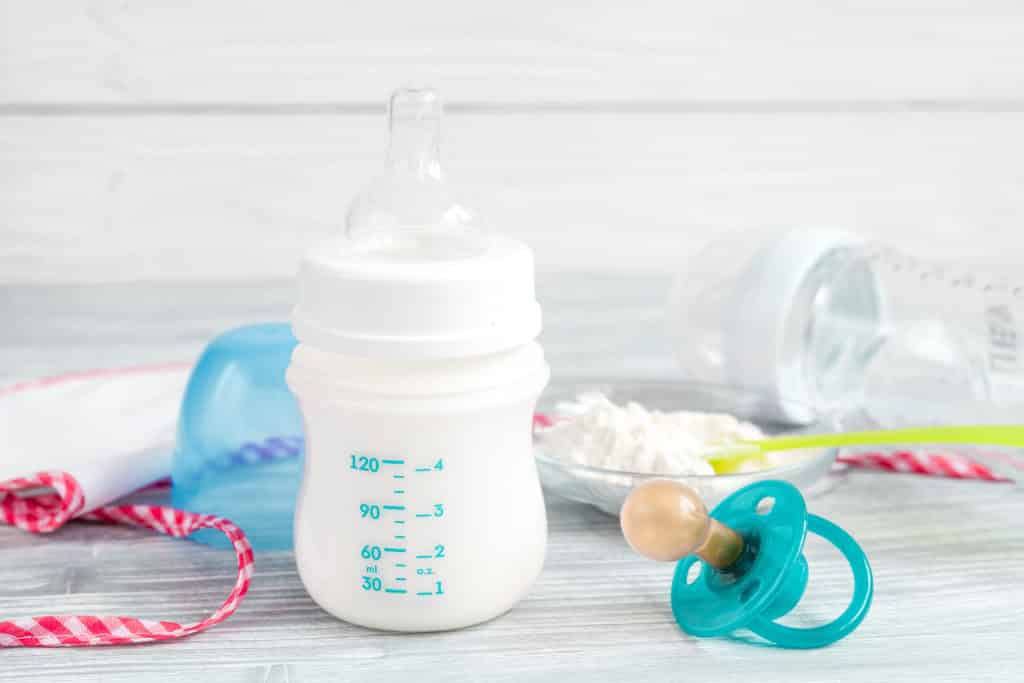
1) Use water from a safe source to prepare your baby’s formula. It is advisable to use distilled or boiled water. Please, do not use sachet water.
2) Check the instructions on the formula container for the quantity of water to use. Most feeding bottles come calibrated and can be used to get an accurate measurement. Please use the exact amount stated because:
Too much water can make the preparation too dilute and unable to meet your baby’s nutritional needs.
Too little water can make the preparation too concentrated. This would cause your baby’s organs to work extra hard, leaving your baby dehydrated and or constipated.
Storage
Use the prepared formula quickly or store it immediately.
Unopened infant formula should be stored indoors in a cool and dry place. Do not put your baby’s formula in your vehicles, garage, or any other place outdoors for a long period of time.
Always make sure you check the expiry date on the container of the infant formula before you use it.
Use it within 2hours after you prepare it or 1hour after you start feeding your baby. Do not leave your prepared formula out at room temperature longer than this. It would get spoilt.
If you are mixed feeding, learn more about storing breastmilk and reasons for alterations in taste during storage in other posts.
How do I decide on what formula to use?
Finally,
If you do not plan on using your prepared formula within 2hours, store it in the fridge immediately and use within 24hours.
Use warm water to heat up your baby’s formula. You can place it for a few minutes under running warm water, or place it in a bowl of warm water. Never use a microwave to warm your baby’s formula.
Before you feed your baby, pour a few drops on the back of your hand to make sure it is not too hot.
Get rid of any remnant formula after feeding your baby and wash the feeding bottle immediately. The combination of the formula and your baby’s saliva can allow bacteria to grow, making it unhealthy for your baby’s consumption.
Make sure you clean and sterilize the feeding bottles before each feed.
Although no formula can truly replicate breast milk, modern formulas provide an close alternative where mother chooses or breastmilk from mum or a donor are unavailable. Bottle feeding moments are amazing opportunities for you and your baby to get closer and to know each other more.
Also, bottle feeding allows your partner and other family members to help you with some of the feeding sessions so you can rest or return to work. If for any reason you baby doesn’t like bottles, you can learn about alternative was of feeding baby
In Nigeria, traditional postpartum care has always been one of our age long customs; this celebrated activity is commonly called omugwo in Igbo, ojojo omo in Yoruba and wanka’n jegoin Hausa.
During this highly anticipated period, new mothers(especially first-timers) are usually encouraged to rest as they ease into their new roles as mothers. An important aspect of this role is child nourishment, new mothers are usually put through indigenous methods to improve milk production.
Believe it or not….
One method our African mothers rely largely on is regular suckling by the infant; the more a baby suckles at its mother’s breast, the more milk is produced. It would interest you to know that this is not just a superstition, it is a fact backed by science. Therefore, the best way to improve breast milk production is to keep on nursing your baby on demand. For mothers pumping exclusively a technique called power pumping is used. This is 3-4 intermittent pumping sessions for 10 minutes with breaks in between.
However, for some mothers, this is strategy is often insufficient as they often deal with pain while breastfeeding and struggle daily to produce enough milk for their babies.
If you’re like the typical mom who can’t bear the sound of their lovely baby’s cries of hunger, we’ve got you covered with this list of Nigerian foods that will help you increase the rate at which your breast produces milk.
List of Nigerian Foods That Boost Breast Milk Production
1. Fura de nunu ( Milk and Millet Gruel)
This is a common beverage originating from the Fulani people of West Africa. With Fura de nunu, you have a rich, delicious blend of fermented cow’s milk (nunu) and millet dough (fura).
In addition to refreshing you on a hot afternoon, Fura contains many essential nutrients which improve breast milk production.
Hausa Millet porridge for breastfeeding mums
It would interest you to know that Nunu is an excellent source of protein, calcium, phosphorous and vitamins A, C, E and B complex. Fura is also known to contain essential amino acids, phytochemicals, antioxidants, and micronutrients. If taken regularly, this is a sure way to increase the production of very rich breast milk for your little one.
2. Kunu (A Northern Nigerian Gruel)
Another staple beverage that is quite popular in most parts of Nigeria, especially the north, is Kunu. Commonly made from millet, rice, sorghum, tiger nuts, guinea corn, maize, or a mixture of some or all of these, this locally made drink is just the right thing for you!
Furthermore, Kunu contains lactic acid, carbohydrates, proteins, and fat which are essential for normal body function. This drink would definitely leave you feeling nourished.
In addition, you get more breast milk to nourish your baby.
3. Pap
Popularly known as Akamu, Ogi, Eko or its fancier name, African Corn Porridge, this is a fermented pudding cereal made from millet, maize or sorghum. It is a ready-to-eat food packed with numerous essential nutrients like carbohydrate, B vitamins, folic acid, vitamins A and C, potassium, zinc and others.
Pap is highly nutritious and helps in boosting breast milk production
Considering its highly nutritious content, it is no wonder why so many of our mothers swear by this meal to help increase breast milk production. Please note that Pap is best taken with milk and sugar to give you a satisfying experience.
4. Moringa
This nutrient packed plant is a great source of vitamins and minerals, nursing mothers would get more out of these than most other vegetables. It is a multi-purpose herbal plant, that is, all parts of this plant can be used as it contains varying amounts of essential amino acids, anitoxidants, carotenoids and many other nutrients.
Moringa leaves improve breast milk supply
Research has proven that infusing this plant into your meals is an effective means of improving your mother’s milk production. Moringa leaves can be added to soups, salads, or simply taken in juice form.
5. Carrots
Eating carrots is a great way to boost lactation as they contain vitamin A and potassium, both of which help to improve the quality and quantity of breast milk.
Eating carrots are a great way to increase your supply as well as loose weight
As a plus, they’re a great way to lose that stubborn baby fat. They can be snacked on, juiced or eaten raw in the form of salads. Carrots are available everywhere and may just be the boost your mammary glands need.
6. Kaun (Pot-ash/ Keun / Akanwu)
Potash is a general name given to potassium containing compounds. Kaun, a lake- salt, is an ancient Nigerian food additive used in traditional cooking that has been known to add flavour and improve the taste of a dish. It’s a form of potash. Other sources are from palm kernel shells and dried, roasted unripe plantain peels.
Most women do not know that kaun is also helpful when nursing babies. Its high mineral content can serve a great stimulant for lactation. Potash should be taken in moderation in its cooked form. Excessive amounts (more than a teaspoon daily) can cause upset tummy. It can cause uterne contrations and thus must be avoided in pregnancy,
7.Watermelon
Sweet and juicy watermelons are another great addition to this list of lactogenic foods. This fruit is rich in fiber, fructose and a variety of minerals and vitamins. Additionally, its remarkably high water content would keep you hydrated, get your milk flowing and keep your baby full.
You can slice, dice or even blend this it in addition to other fruits to make a delicious smoothie. In addition, watermelons can be grilled.
8. Ofada Rice
Known globally as brown rice, locally grown Ofada /Abakaliki Rice is an effective addition to your diet as a nursing mother because it contains a variety nutrients like minerals, vitamin B and E. It also contains hormonal stimulants that help to improve lactation and increase breast milk production.
Ofada (Brown Rice) is an effective addition to your meal to increase breast milk production
If you’re also planning to lose that persistent baby fat, you should definitely switch white rice for a well prepared bowl of ofada rice and sauce.
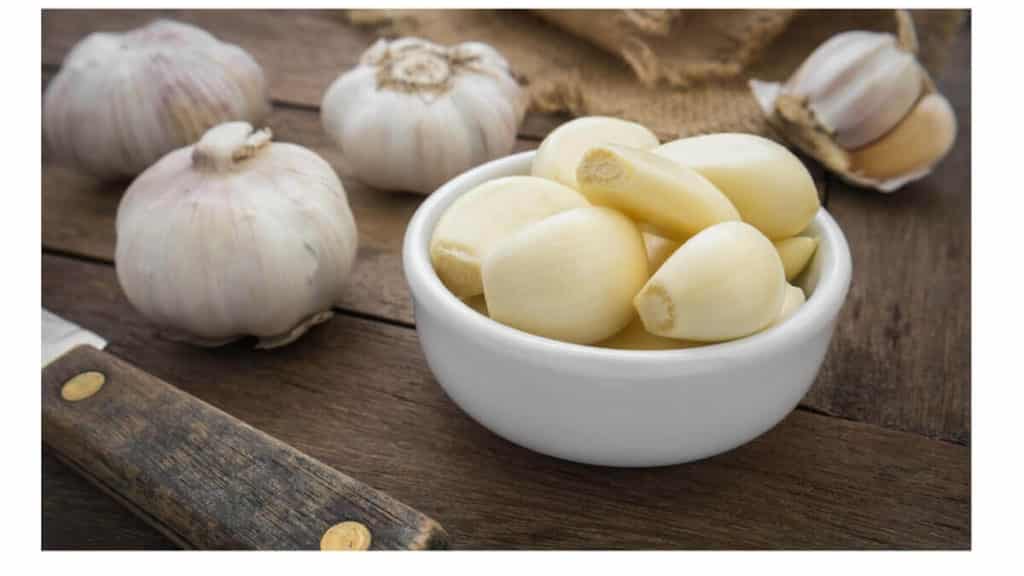
9.Garlic
Garlic is popular for improving the immune system but do you know that it can also help improve breast milk production? Commonly used as a seasoning or spice in traditional cooking, garlic has a rich supply of enzymes, vitamins and minerals that help improve milk production.
Garlic is a natural breast milk booster
But remember to go easy on this one, it’s notorious for causing body odours, especially when taken in large quantities.
Go easy on the garlic sisi
10.Water
Breast milk is essentially made up of water. Therefore, staying hydrated is crucial to breast milk production. And what better way to stay hydrated than to drink lots of water?
Drink up to 2.5l of water daily to boost your milk supply especially after breastfeeding
A minimum of 8 glasses per day is the target! Remember, the goal is not only to increase the quantity of breast milk you produce, but also to improve its quality.
Yeah…we know we said 10 but there’s more……
Ewe bombo (awalagbo in Yoruba)
Uda and other herbs used to make pepper soup for pregnant women
Tiger nuts and dates
Ginger ( preferably freshly grated in warm water)
Cumin
Fenugreek (It’s called “hulba” grown in Northern Nigeria ladies!)
Finally, an overall healthy diet is key, not only to help nourish your newborn, but also to nourish you.
Learn more about foods that increase your breastmilk supply